Road signs, signals and markings
Road signs use shape and color to tell you what to expect before you can read them: red means stop or don't, yellow warns, and fluorescent yellow-green marks school and pedestrian areas. This topic also covers traffic signals, lane markings and curb colors.
29 questionsRead the study notes ↓
Question 1 of 29
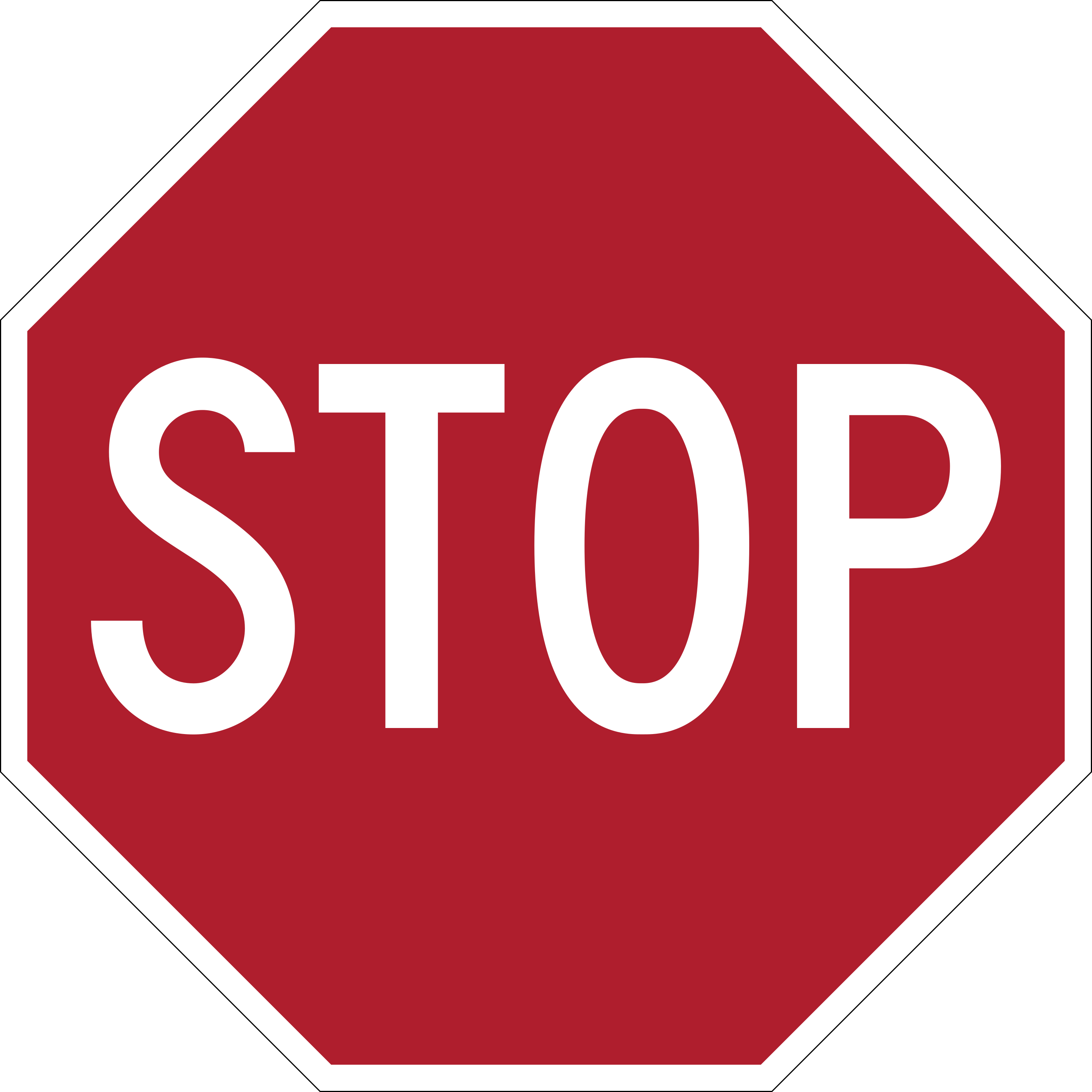
What must you do when you come to this sign?
Study notes
Lights, signs, pavement lines, and painted curbs tell you what to do without words. The test often shows a picture and asks what it means.
Key numbers
- 25 mphUsual top speed of road maintenance vehicles with the slow-moving triangle
- 2 feetTwo sets of double yellow lines this far apart (or more) count as a barrier
Traffic lights
- Solid red: stop. You may then turn right after stopping at the limit line and letting pedestrians cross, unless a NO TURN ON RED sign is posted.
- Red arrow: stop, and do not turn until a green light or green arrow shows. Flashing red: stop, then go when it is safe.
- Solid yellow: red is coming. Stop if you safely can; otherwise cross carefully. Flashing yellow: slow down and stay alert, but no stop is required.
- Green arrow: a protected turn, since oncoming cars have a red light. Flashing yellow arrow: you may turn left, but the turn is unprotected, so yield to oncoming traffic.
- If a signal is dark because it is broken, treat the intersection like an all-way STOP.
- When the DON'T WALK sign or hand symbol flashes, people should not start crossing, but you must still yield to anyone already crossing.
Red and white signs
- STOP: stop completely at the limit line or before the crosswalk. If neither is there, stop before the intersection. Look all ways before going.
- YIELD: ease off and prepare to stop, letting any car, bike rider, or person on foot go ahead of you.
- DO NOT ENTER or WRONG WAY: you are heading into oncoming traffic. Back out or turn around as soon as you safely can. At night, road reflectors glowing red give the same warning.
- Red circle with a slash: the action pictured inside, such as a U-turn or left turn, is not allowed.
Warning signs
- Round yellow-and-black or X-shaped sign: railroad crossing ahead. Look, listen, slow down, be ready to stop, and let any train go by.
- Five-sided sign: a school is close by. Go slowly and stop for children using the crosswalk. A diamond shape warns about road conditions or dangers ahead.
- Red-and-orange triangle on a vehicle's rear: a slow-moving vehicle. Road maintenance vehicles with it usually go 25 mph or slower.
Lines on the road
- Broken yellow line on your side: passing is allowed when it is safe.
- Double solid yellow: no crossing to pass. You may cross one set to turn left into or out of a driveway or private road, or to make a U-turn.
- Two sets of double yellow lines 2 or more feet apart are a barrier. Don't drive over it or turn across it except at a marked opening.
- Double solid white lines are also a barrier, often beside a carpool lane. Never change lanes across them; wait for a single broken white line.
- A row of white triangles pointing at you is a yield line. It shows where to yield or stop.
Painted curbs
- Red: stopping, standing, and parking are all banned. Only buses may stop in red zones marked for buses.
- White: stop only long enough for passengers to get in or out.
- Green: parking for a limited time, shown on a sign or painted on the curb.
- Yellow: loading and unloading of passengers and freight, for no longer than the posted time.
- Blue: for a disabled person, or a driver carrying one, with a special placard or license plate.
From the California Driver Handbook: Section 7: Laws and Rules of the Road · Section 6: Navigating the Roads · Section 6: Navigating the Roads (Continued) · Section 7: Laws and Rules of the Road (Continued)